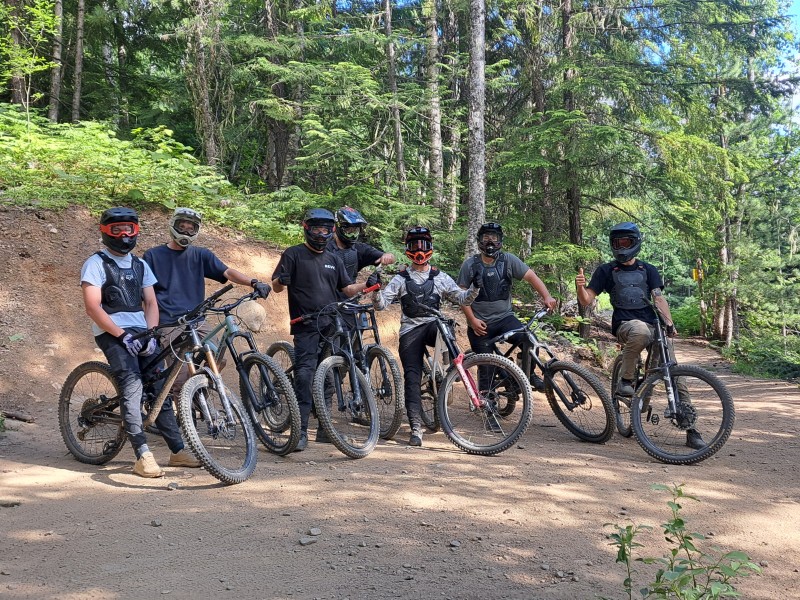

We have all thought about what we would bring if we were trapped on a deserted island. But it’s not until this year, we had to think about what we would do if we were trapped in an apartment filled with strangers.
This is the reality for many seasonal workers in Canadian ski towns. For most, living in your own place is not affordable, leaving shared housing as the only option.
So what do you do if your roommate gets COVID-19?
When your roommate gets COVID-19
World traveller, Ludovic Cetto, experienced this challenge first-hand a couple of months ago in Whistler.
“811 told my housemate: Tell all of your housemates they also all have to isolate for two weeks because you are all in the same house,” he said.
That’s right. If your roommate tests positive for COVID-19, you’re in it together. “It will just be assumed that you have it, to reduce the burden on testing facilities,” Cetto explains.
Sounds tempting, doesn’t it? Being locked down with someone with a deadly virus waiting for it to jump you. “You just have to take it at that point,” Ludovic says.
The hardest part about lockdown and isolation for Cetto has been sharing what is already a very small space.
“None of these provincial guidelines were designed for ski bums living one on top of each other in a six-person house. You have to stay away from people as much as possible, yet everyone is in the house at the same time. It’s impossible,” he says.
Revelstoke family physician, Victoria Haines, says that if your roommate gets COVID-19 the best thing is if everyone else moves out, or that the sick person moves out.
She mentions how Banff has set up free emergency housing for COVID-19 positive residents who live in shared housing. However, Revelstoke is not currently offering anything like this.
Cetto feels like there is a divide between people who have had to isolate and not. “Once you have spent those 14 days on your own you realize we all have a part to play in this. It’s hard to convince people that haven’t stared the beast in the eye that this is so important,” Ludovic concluded.
Problematic sick pay
Unlike professional jobs, most seasonal contracts do not offer any sick pay. It becomes tricky to make ends meet when your roommate gets COVID-19 and you have to quit your job, Cetto says.
“If you work part-time, like most people at the moment, you don’t qualify for a lot of the wage subsidies,” Cetto explains. Even the lucky ones that do qualify for sickness benefits due to COVID-19 can only receive this support once.
Can we blame young frontline workers?
According to Interior Health’s statistics from the end of Nov., the average age of people infected in Revelstoke is 33 years old, Dr. Haines says.
Cetto describes the situation as a “double-edged sword.”
“Most of the transmissions in the second wave are from young person to young person, we are definitely the worst. But equally, 90% of frontline workers are young people putting themselves at risk, so can you really blame us? We are the ones working those minimum wage jobs keeping the economy running,” Cetto says.
The French-Italian is currently spending his second winter season in Revelstoke, working at a hotel in town. He lives in a shared house with one ski instructor and two housekeepers. “We are all extremely frontline in terms of the amount of germs that we bring back into the house from our jobs,” he says.
Sleepless nights grueling a call from contact tracers is the reality for many front line workers in this town. “There are exposures at work all the time. People have been getting coronavirus. It sucks,” Cetto says.
With exposure comes responsibility. Cetto explains how his household has to be more observant of the current restrictions than the average person, in case someone else comes into their house. “So it’s kind of us that have to police the fact that we are very exposed, which is weird,” he says.
The governmental expectations of self-policing can be challenging in shared house. “What escapes young people without families in ski towns is the concept of keeping other people safe,” Cetto says.

Have ‘the talk’
Dr. Haines encourages roommates to have ‘the talk.’ “Instead of assuming that you know what the other person thinks, or what the other person is going to do, have the talk! It’s kind of like when you get a new boyfriend or girlfriend, and you want to know if they have an STD. You feel kind of awkward, you don’t want to pry, but honestly you got to know, right?”
Make sure you know if they have been in contact with anyone who has travelled outside of Revelstoke, if they have any symptoms, and make sure everybody is aware that each roommate can’t have different bubbles outside of their household, Dr. Haines says.
If you have specific questions about personal situations related to COVID-19, where public guidelines don’t provide sufficient answers of what to do, Dr. Haines encourages people to call their family doctor or the 8-1-1 B.C. HealthLink number.
Socializing at the ski resort
The “huge” socializing life-saver for Cetto has been the ski resort. “We are some of the luckiest people in the world to have one of the best ski resorts at our doorsteps, and it being totally legal for us to spend time there. Only time will tell if transmissions have been occurring on the hill. It’s easy to get carried away when spirits are high,” Ludovic says.
Dr. Haines explains that exercising is allowed as long as you are two metres away from everyone else. “Only take the chairlift or gondola with your household bubble, and just wear your flipping mask or buff, don’t be a jerk, and hopefully we can keep our ski hills open,” she says.

Suck it up for Christmas
Not a surprise, but a bummer non the less, was the news from the Provincial Health Officer (PHO) has extended suspensions of events and social gatherings until January 8, 2021.
Cetto’s house will be spending Christmas on their own. “It obviously sucks big time. But at least we’re part of the lucky few who can say they live in the same house as their best friends, so we’ll make it work,” he says.
Dr. Haines encourages shared households to be creative, but not when it comes to loopholes. “If your roommates aren’t your besties, and not the people you would’ve chosen to spend Christmas with, as tough as it sounds, please just suck it up. The sooner we get this pandemic under control, the sooner we will be out of it,” she says.
What if sending big parcels and FaceTiming just is not enough? “If it’s really, really important for you to get together with somebody that’s not in your bubble, you can do so if you both self-isolate for 14 days before meeting up,” the family physician says.
Chronic COVID-19
Dr. Haines is concerned about young people’s carefree attitude towards catching COVID-19 themselves.
“So far, Revelstoke has not had any patients become seriously ill with COVID-19, but Long-Covid, or chronic symptoms is what terrifies me,” she says. The doctor refers to an increasing body of evidence showing healthy and young people starting off with mild symptoms followed by severe symptoms months later. “Their immune systems are really compromised and their whole life is changed,” Dr. Haines says.
From having dealt with patients with chronic fatigue, this is the last thing Dr. Haines wishes on anyone.
“We all got lazy over the summer when we had no cases, and it was kind of OK, but it’s not OK right now,” Dr. Haines concludes.
What did you think of this story?
Your feedback after we publish a story helps ensure we're always improving our reporting to better serve you