
Revelstoke Development Cost Charges stakeholder meeting draws heated crowd
A June 21 stakeholder meeting on the ongoing Development Cost Charges bylaw update was a heated affair as attendees from the development community decried increases to development fees.
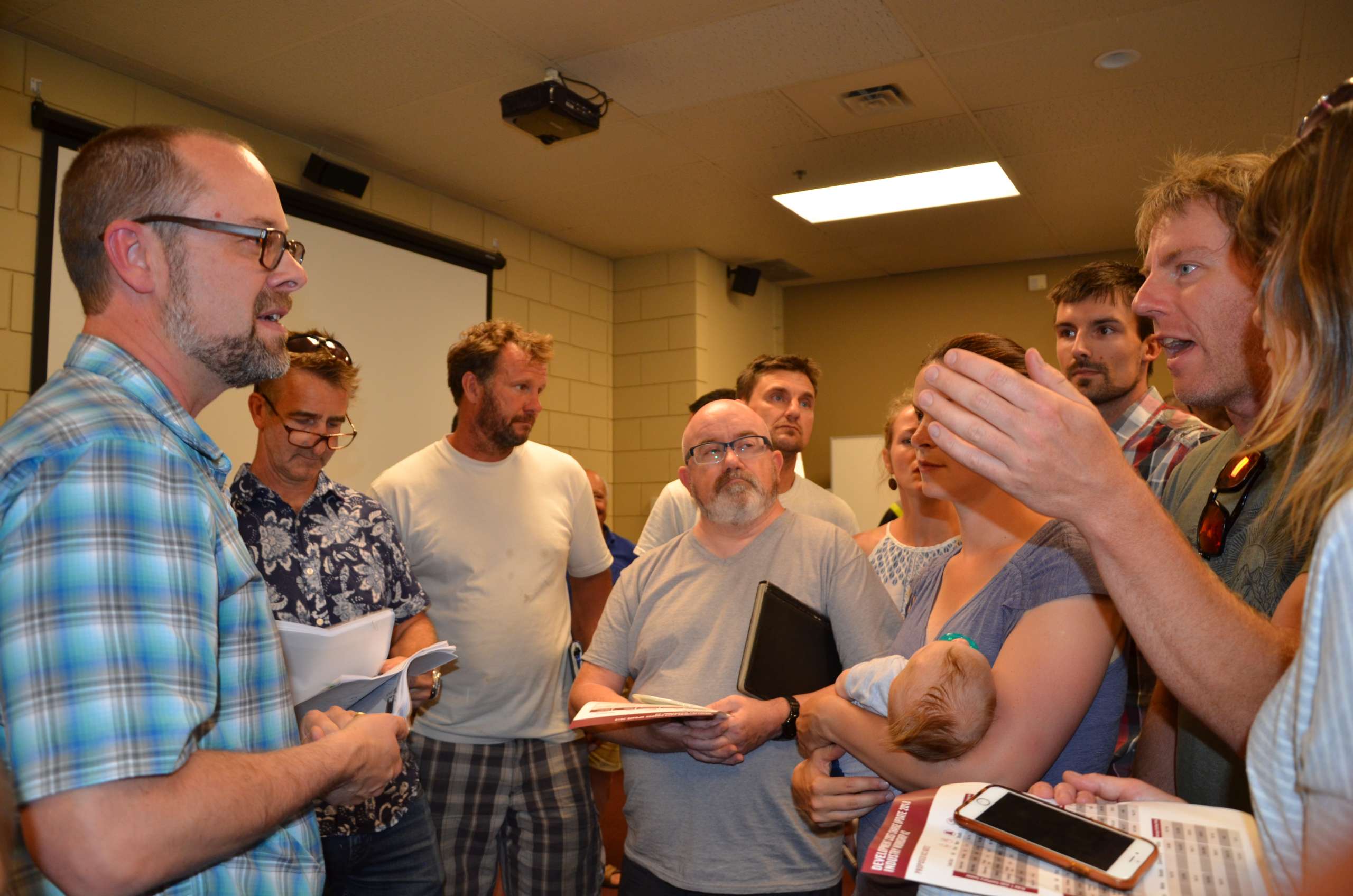
A city of Revelstoke open house on proposed Development Cost Charge increases appears to have only brought more contention to an already controversial issue for many in the community, including developers, construction contractors, and real estate agents.
The background is the ongoing Development Cost Charges bylaw update, most commonly known as the “DCC” bylaw. In Revelstoke and most municipalities in B.C., the fee is charged on new developments as a way to pay for water, sewer and parks infrastructure and upgrades. Currently, the city is updating the existing bylaw, which was last renewed in 2005.
The process involves looking at future infrastructure projects and calculating their costs, then figuring out how to apportion costs under the bylaw. In theory, the concept is that new development pays the charges to cover their costs to access infrastructure. In reality, the bylaws are complex and raise many questions, especially on review.

Elisa Becker of McElhanney talks to stakeholders about proposed growth and development. Photo: Melissa Jameson/Revelstoke Mountaineer.
The ongoing DCC update process had been moving ahead with not much general pubic attention until last week, when an interim report was presented to the committee of the whole on June 14. The report detailed a list of infrastructure upgrade costs, including $17.3 million for transportation, $13.3 million for water infrastructure, $34 million for sewer projects like the sewage treatment plant upgrade, and $5.1 million for parks projects. The result was proposed dramatic increases in DCC costs, which are outlined in the document embedded below.
The cost jumps are big. A single family home with sewer would jump from $12,370 to $31,559. Commercial would jump from $62 to $213 per square metre. It’s complex; the latest numbers are in the presentation embedded below.
The open house, held on the evening of Thursday, June 21 at the community centre, was intended as a way to get stakeholder feedback on potential significant increases to the city’s Development Cost Charges (DCCs).
The problem for many who attended was the lack of a formal presentation at the beginning to explain how the city came to the proposed rates. Others asked about what other kind of offsetting development charges had been looked at. With no lead-in to an informed conversation, or direction on how the city wanted to receive information, the evening appeared filled with voices attempting to talk over one another and little room for constructive movement towards solutions.
Craig Tennock sits on the city’s economic development committee and said while he understands the need for DCCs, the proposed increase required more than the poster boards with numbers set out in the room. Tennock called the lack of communication “negligent and reckless,” saying with the proposed increases there should have been comments from council or city staff addressing the potential community impacts such as affordability in housing, unemployment and development. There were several information boards up at the open house, but these mostly only included numbers.
“There should be another plate up saying, ‘Hey, look we realize this is big and here are the potential community impacts we want to keep an eye on. This is just to let you know we’ve got your back,’” he said.
Although only intended as a stakeholder meeting focused on the development community, social media posts about the DCC open house quickly spread with many questioning whether the city had done its due diligence in not only following the provincial guidelines set out for updating DCCs, but if all the necessary stakeholders had been engaged. Shelley Evans, who along with her husband David is currently developing Mackenzie Village complex in Arrow Heights, said to her knowledge many local contractors had not been invited to any of the previous stakeholder meetings regarding the DCC updates.
City of Revelstoke’s director of engineering Mike Thomas and director of planning and development Nigel Whitehead were the only city staff present for the meeting along with representatives from engineering consulting firm McElhanney.
Thomas appeared to spend the majority of the two-hour open house engaged in heated conversations with attendees, as did Gary Sulz, the only councillor to attend the open house. Mayor Mark McKee also attended, but did not stay long.
In a phone interview with the Mountaineer after the meeting, Sulz said he felt the meeting provided a good opportunity for the city to engage with stakeholders.
“It’s important for stakeholders to say their piece and for us to listen,” he said.
Community Futures general manager Kevin Dorrius was among one of the only voices to show support for city staff, saying he felt both staff and council had been “thrown under the bus” when it came to the planning and execution of Thursday evening’s open house.
“Everybody understands there’s a balance that has to be met, but this meeting tonight was very badly conceived. I feel bad for staff and council. This stuff has to stop. It’s pitting neighbour against neighbour,” said Dorrius.
Developers, realtors say they aren’t against increases but want a level playing field
Concerns also arose over a lack of transparency over what other means the city had looked at to help offset costs of much needed infrastructure. Development Cost Charges are one-time upfront charges generally applied to developers when building a new development. The charges help offset any required new infrastructure (including sewer, roads, water) that might be required by the city as a result of that new development. The issue for Revelstoke is that in cases such as the sewage treatment plant, the current infrastructure not only needs to be improved for the benefit of new development, it also needs to be improved for people already in the community. A number of conversations during the open house focused on the desire for these costs to be better shared among current and future tax payers, and developers.
Local resident Jesse Cole questioned Thomas during a conversation asking why alternative means to collect the necessary funds weren’t presented, saying it would have been to the city’s benefit to let the public and stakeholders know about other methods of collecting financing for necessary infrastructure upgrades.
“There’s a difference between massive cost up front that stifles development and cost spread out over a term that becomes more reasonable,” said Cole.
Local developer David Evans agreed financing projects through additional taxation could help offset DCCs. Evans said the proposed increase will see a DCC charge of approximately $4 million for phases two and three of Mackenzie Village. If that happens, Evans says Mackenzie Village will not move forward. Evans also questioned why the city wouldn’t encourage development with reduced DCCs with the future potential to finance future infrastructure with the additional taxes to be collected.
Thomas said attempting to offset major infrastructure costs through taxation could be problematic.
“That would be property taxes because there’s pretty much no other format in the Local Government Act’s range of tools that would work to be phased in over time,” said Thomas.
Next steps on the proposed increase to DCC charges include city staff sending a preliminary report to the province next week. After that the proposed rates will come back to council for further discussion in July, when council will deliberate on how to proceed with the report, likely including adjustments to the draft plan.
The DCC subject is complex; this story is an update on the latest new developments. We welcome readers’ views and value informed debate.
Here: the slide show presented to the city’s committee of the whole on June 14, which contains the most recent numbers:
Revelstoke DCC Bylaw Update document` by Revelstoke Mountaineer on Scribd
What did you think of this story?
Your feedback after we publish a story helps ensure we're always improving our reporting to better serve you
Related Articles
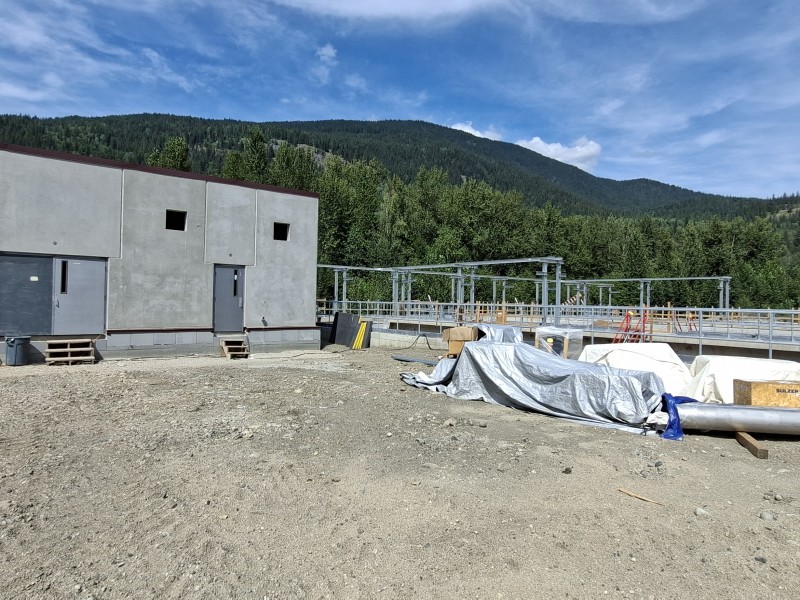
Wastewater treatment plant upgrades set to future-proof facility for 2 decades
Plans to include Big Eddy residents and businesses into the updated facility still in the early stages, city director of engineering says.
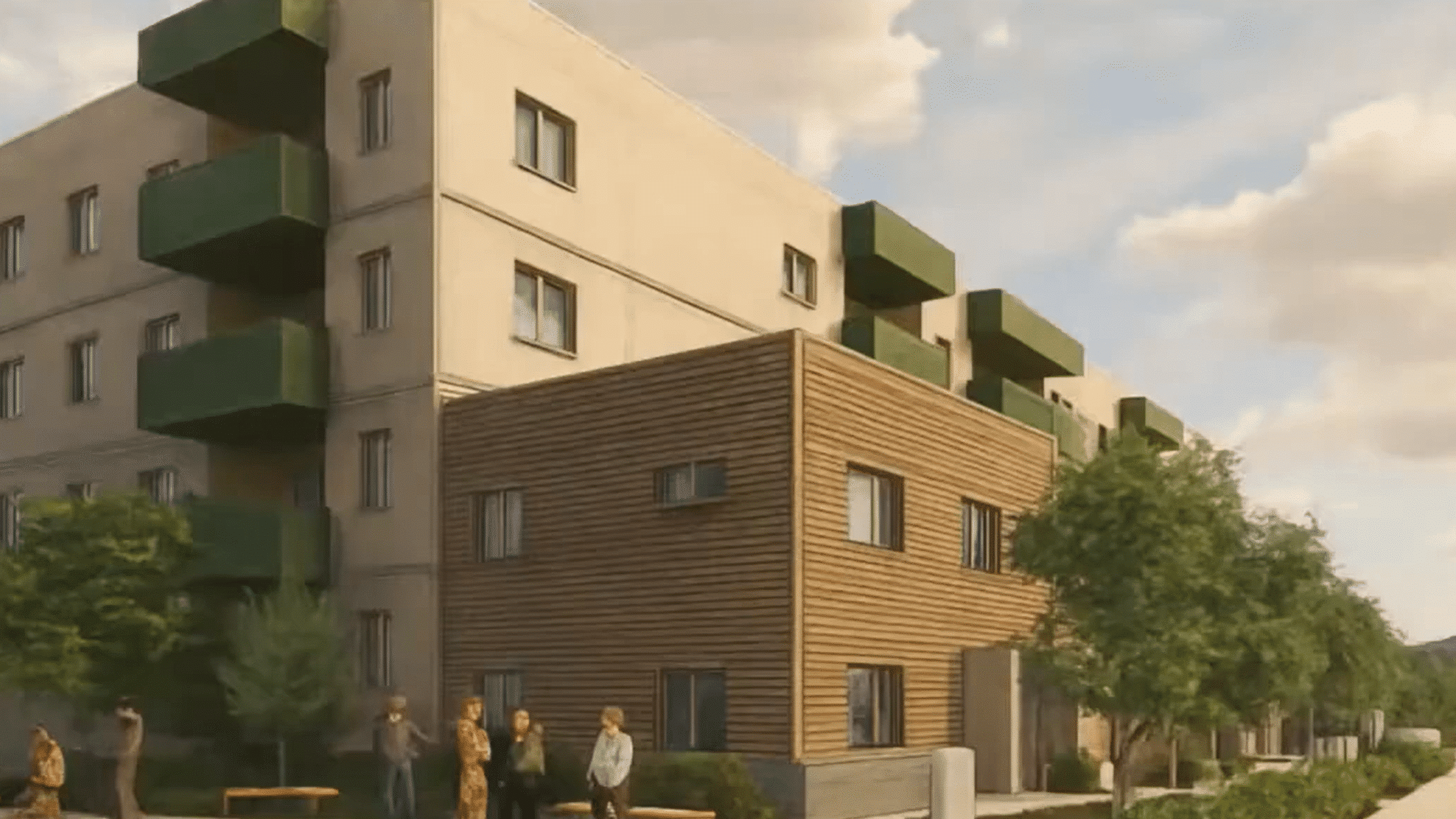
Revelstoke granted $200,000 to rework development guidelines
Clarifying building requirements is key in speeding up development approvals, director of development services says.

More childcare spaces needed as families face estimated $35,000 income impact annually
Revelstoke Child Care Society still has over 160 families waitlisted as plans to expand into Okanagan College building take shape.